
A Chicana Printmaker’s Radical Archive

Ester Hernandez is highlighted in a new series from Stanford University’s art museum on artists’ ephemera
Courtesy of Department of Special Collections, Stanford University Libraries. Used with permission from the artist.

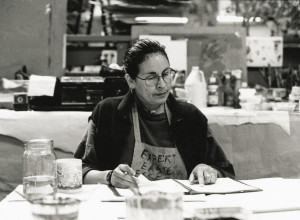
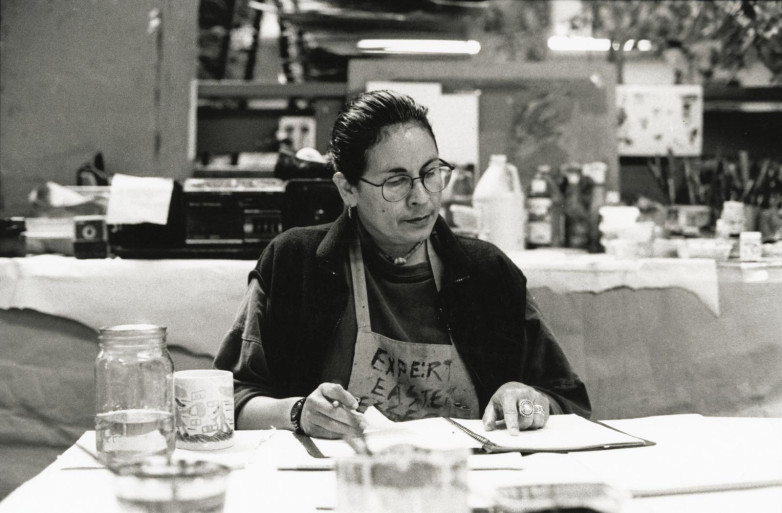
Ester Hernandez at Creativity Explored in San Francisco (ca. 1998).

The first-generation experience of Los Angeles is a pretty affirming one to walk into if you’re of Mexican descent. Famous and infamous for being one of the hotbeds of the Chicano Movement, the cultural iconography and expressions born out of that historical movement remain reasonably healthy today. On a sociopolitical, norm-setting level, it created room for someone like me to exist without much overt discrimination and access to magnet programs for quality education.

Although Chicano symbols and culture are embedded in the LA landscape and people, understanding their importance on the multiple registers they impacted is a different task. Some of those early footholds into the Chicano Movement are transmitted in certain grade school history classes, if they still are at all. Lacking familial connections in this moment, it wasn’t until working at the Cantor Arts Center at Stanford University as an adult that I better understood it. 

© Ester Hernandez, courtesy Department of Special Collections, Stanford University Libraries

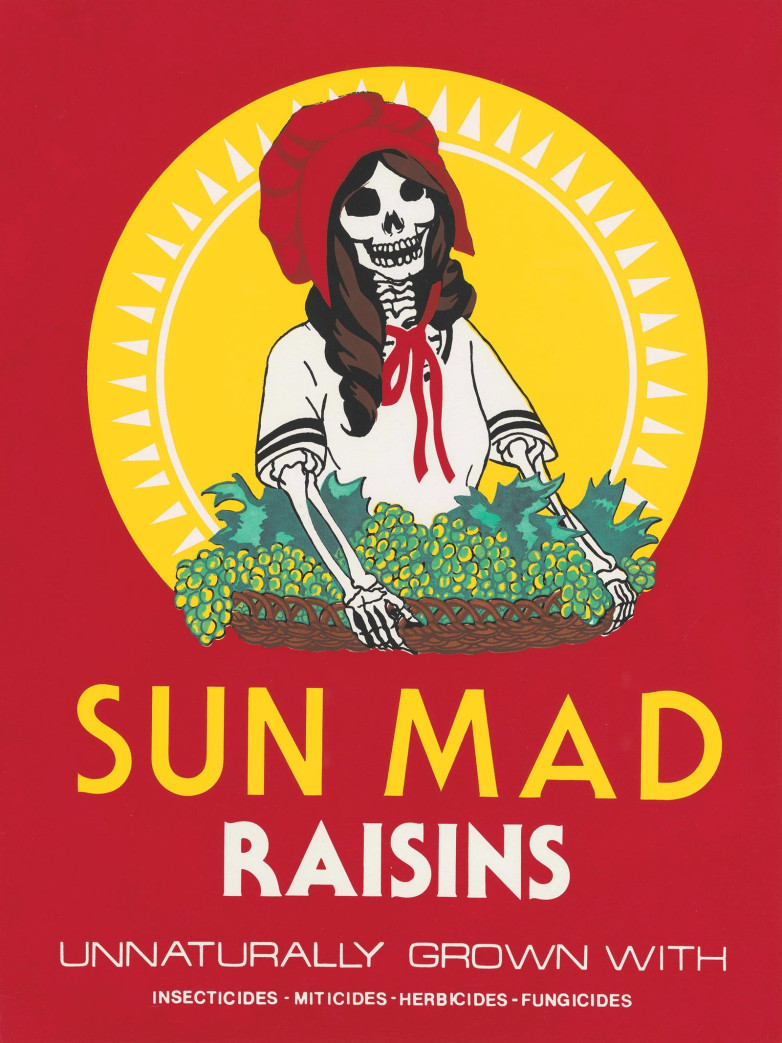
Hernandez’s “Sun Mad” (1982) prints responded to her family’s experiences working in the agricultural industry.

In 2022, I began working in curatorial at the Cantor, at a moment of renewal with new director Veronica Roberts at the helm. In our first few months, we were introduced to Roberto Trujillo, the librarian for Stanford Libraries’ Special Collections. He informed us that Special Collections had a robust collection of artist archives and, in particular, good holdings of Chicano artists and other important figures. Keen to capitalize on this resource, in 2024, Veronica launched a pilot project titled Archive Rooms, designed to give curators the chance to dig deep into an artist’s archive and curate a focused grouping of material for a single-room exhibition. The first iteration in 2024 highlighted Bernice Bing and Lynn Hershman Leeson’s archives. The second iteration, on view through July 5, features materials from the archives of Ester Hernandez and Ruth Asawa—the latter curated by Kathryn Cua—both educators, activists, and artists whose legacies are significant to the Bay Area. 

The choice to feature Hernandez seemed like a no-brainer to me. Her local ties to the Mission District in San Francisco, where she currently lives, her time at UC Berkeley, and, perhaps most importantly, her coming of age in the San Joaquin Valley, all invoke deep, specific histories of place. She is also associated with the Chicano Movement, and I was interested in exploring the first-person perspective her papers could offer. While researching in her archives, I coincidentally met her on 24th Street in San Francisco as I was helping a friend move in—the choice, I reckoned, had been emphatically decided for me. 

The process of going through the archive of a living artist is a curious task. You’re able to see, through trace material, the arc of their life, the decisions they made, the people who became their friends, and the hard facts of passing time, illness, and death. Hernandez’s father was also an eager photographer, and thus I saw dozens of photographs of Hernandez and her siblings as they grew up. It was in this part of her archives that I encountered a photograph that would color my framework for the exhibition. 

The inscription on this photograph (seen below) reads, “In a railroad ‘camp’, somewhere in Texas, c. 1916.” Its context escaped me entirely and pushed me to learn more. Railroads, as it turns out, played a key role in how Hernandez’s family wound up in El Paso, Texas, following the Mexican Revolution. Moreover, the history of the development of the railroads in both the United States and Mexico is functionally representative of the pace of each country’s economic development and paints a clear picture of how Mexican migration to El Norte started. Mexicans chased the more developed economy of the US, which won its independence much earlier than Mexico, and responded to the total elite-capture of Mexican economic growth enabled by US-investor-funded industry during the Porfiriato dictatorship. 

This was part of, at the very least, what kicked off the Mexican Revolution. At the tail end of the nineteenth century, migrants fled along the same railroads that connected to US ports of entry, like El Paso, Texas, and the Southwest US. These were in the midst of massive railroad construction projects following the discovery of ground oil. In fact, the mythic, oil-rich Permian Basin was discovered a year after this photo was taken. Many fleeing the Revolution, like Hernandez’s family, wound up working brutal railroad construction jobs connecting oil wells to existing Southern Pacific Railroad lines. Later, her family followed that same network of the Southern Pacific Railroad into the San Joaquin Valley to work in the state’s burgeoning agribusiness industry. 
Ester Hernandez
1/3
Courtesy the artist and Department of Special Collections, Stanford University Libraries

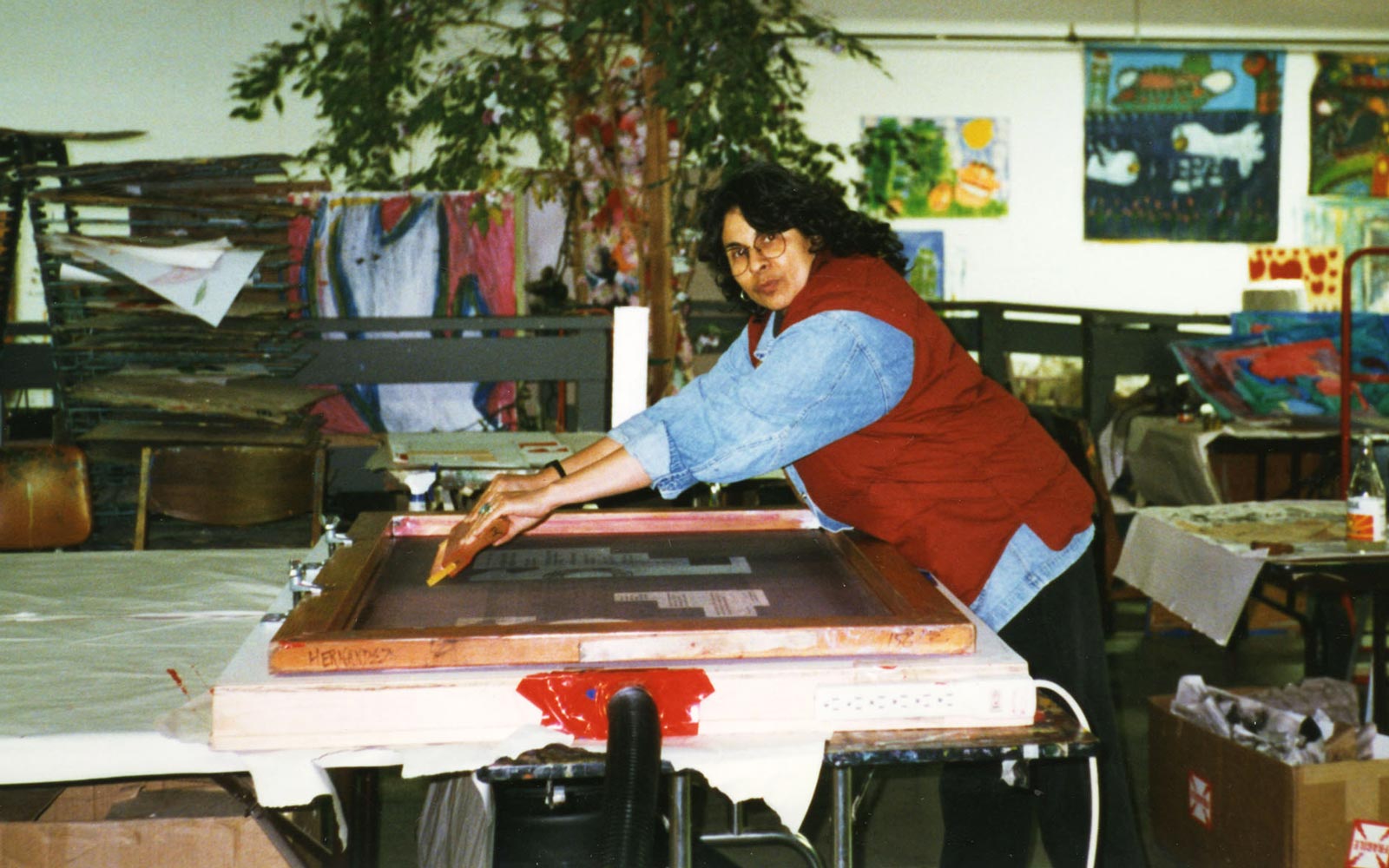
Ester Hernandez printing at Creativity Explored (c. 1997).

Ester Hernandez’s grandmother Tomasa, mother, and uncle in a railroad “camp” in Texas
2/3
Courtesy the artist and Department of Special Collections, Stanford University Libraries

Ester Hernandez’s grandmother Tomasa, mother, and uncle in a railroad “camp” in Texas (ca. 1916).

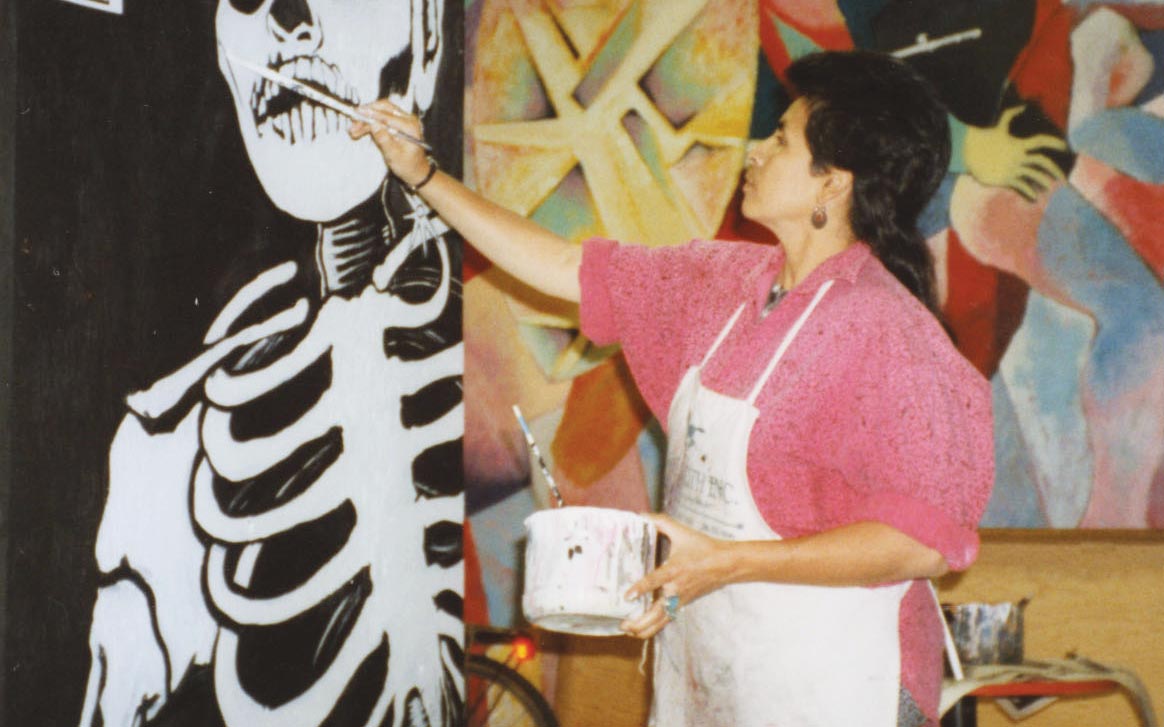
painting a mural during Day of the Dead
3/3
Courtesy the artist and Department of Special Collections, Stanford University Libraries

Ester Hernandez at Mission Cultural Center, painting a mural during Day of the Dead (1992). 

There, Hernandez bore witness to the nascent United Farm Workers (UFW) movement, including the pivotal Teatro Campesino farmworker theatre troupe. This marked the beginning of her involvement in the historical Chicano Movement, which traces much of its origins and visual program to the farm labor organizing of the mid-1960s led by activists Dolores Huerta and Cesar Chavez. Hernandez took its call seriously, contributing her artwork for “La Causa”—better wages and working conditions at a moment of American abundance and the high watermark of its middle class. 

The (temporary) nationwide success of the UFW’s fight, the subsequent student blowouts in Southern California and across the Southwest, and the many community organizations founded in the 1970s all rested on something crucial—the resonance of an emergent Chicano visual language. Chicano artists leveraged the shared cultural experiences and the material conditions of Chicanos across urban and rural contexts in their work. But they weren’t the first to do so—both Mexican muralism and printmaking had created a visual repository in prior decades of the peasant farmworker, of the Mexican rural experience, and of the country’s indigenous, Mesoamerican heritage. The Chicano Movement pulled on the same, and through Ester Hernandez’s work, we can see similar iconographic approaches that she took in her work to attend to sociopolitical issues in the United States affecting Chicanos. Most famously, her “Sun Mad” prints, but her entire oeuvre reveals a consistent approach and commitment to sociopolitical concerns. 

Through her correspondences, the conferences she attended, the comadre networks, and the Chicano art community she was an early builder of, her archive reveals the inconceivable ambition of the Chicano Movement: the creation (or formalization, however you like it) of a new cultural identity in the US. One expressly founded on a primarily political basis. The historical Chicano Movement is remembered in culture—as I encountered it—as something passé, as troublingly machista, or sometimes engaging in short-sighted, ethno-nationalist fantasies about the Southwest and California. For all of that, like any historical moment, the archives reveal the plurality of ideas about what the Chicano Movement could be from folks on the ground like Hernandez. That gap between cultural memory of a moment and the actual moment is where scholarship and research operate effectively, to inflect on history we think we understand. 

The focus on Hernandez for this installation of the Cantor Art Center’s Archive Rooms emerges from her archives’ capacity to speak to a variety of factors—monumental events like the Mexican Revolution, the resultant migration of hundreds of thousands of Mexicans who fled the revolution, and their integration into the complicated social fabric of the Southwest and California (with the legacies of native genocide and the Guadalupe Hidalgo treaty in tow). Her archive also reflects the brutal and transformative logic of economic development, specifically of railroads and agribusiness. The grand view of the history that shaped Hernandez’s life, like ours, is fundamentally impersonal, which affirms the necessity of art. Hernandez’s artwork and archives give shape to these impersonal forces, allowing us to close the gap on history to approach the past as memory. This helps us recognize the elliptical pattern of American history as we appreciate her work’s increased poignancy.