Mozart's Letters and Early Composition Manuscripts Go On Show
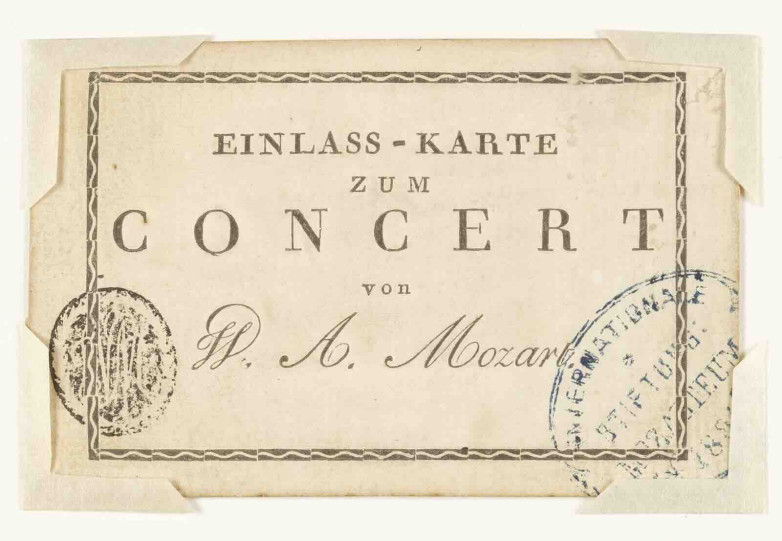
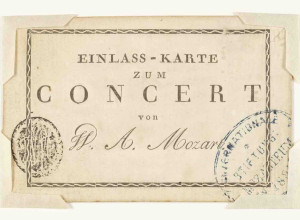
Admission ticket to a concert by Wolfgang Amadeus Mozart, Vienna, after 1782



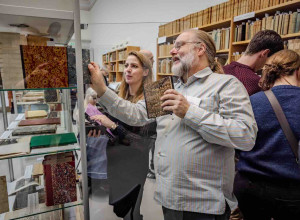
Wolfgang Amadeus Mozart: Treasures from the Mozarteum Foundation of Salzburg, is now running at the Morgan Library & Museum.
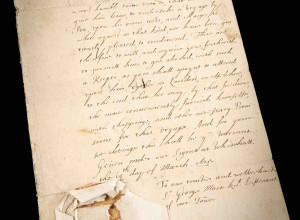
The display focusing on the life and legacy of Wolfgang Amadeus Mozart is on view through May 31, combining the Morgan’s significant holdings in Mozart manuscripts and first editions alongside items on view in the United States for the first time from the Mozarteum Foundation of Salzburg, including Mozart’s clavichord on which he composed The Magic Flute and his childhood violin, as well as letters and personal objects from Mozart and his family.
Highlights include:
- a first edition of Lorenzo Da Ponte’s libretto for Le nozze di Figaro (1786) and Mozart’s autograph manuscript sketch for March of the Priests from The Magic Flute
- Mozart's variations on what is now known as Twinkle, Twinkle, Little Star
- his Symphony no. 25 in G Minor, K. 183, widely known now as the opening theme to the 1984 film Amadeus
- his earliest compositions, among them four keyboard pieces composed in 1761, when he was just five years old
- the Morgan’s autograph manuscript of the Piano Concerto in C
- an admission ticket to a concert by Wolfgang Amadeus Mozart, Vienna, after 1782
The exhibition also includes a new discovery: the final fragment of the only surviving piece of music by Maria Anna (Nannerl) Mozart, Wolfgang’s sister. The fragment was found in a collection that was given to the Morgan in 2019 and was previously miscredited to Wolfgang. The fragment completes the only known work composed by Nannerl, providing insight into her musical training. There are two other fragments held in other institutions in Europe. The piece shows that Nannerl had her own style and musical talent distinct from her brother’s.
“The exhibition highlights the ways in which Mozart’s life and career were extraordinary even in his own time,” said Robinson McClellan, Mary Flagler Cary Curator of Music Manuscripts and Printed Music. “It gives insight into his environment and humanizes this great composer, illuminating his loves, passions, triumphs, and sorrows.”
A related exhibition is on the Morgan's lower level. Sendak, Mozart, and The Magic Flute opens March 17 and runs through June 21. Illustrator Maurice Sendak was also an opera lover who designed sets and costumes for several productions. In 1978 he was invited by Frank Corsaro to create designs for the Houston Grand Opera’s staging of The Magic Flute, one of Sendak’s favorite operas.
It was the first theatrical production Sendak worked on, and he went on to work on many future projects for the opera and ballet. Sendak’s drawings for The Magic Flute range from preparatory sketches to elaborate final watercolors. The works were selected from the artist’s bequest of over 900 objects to the Morgan Library & Museum.